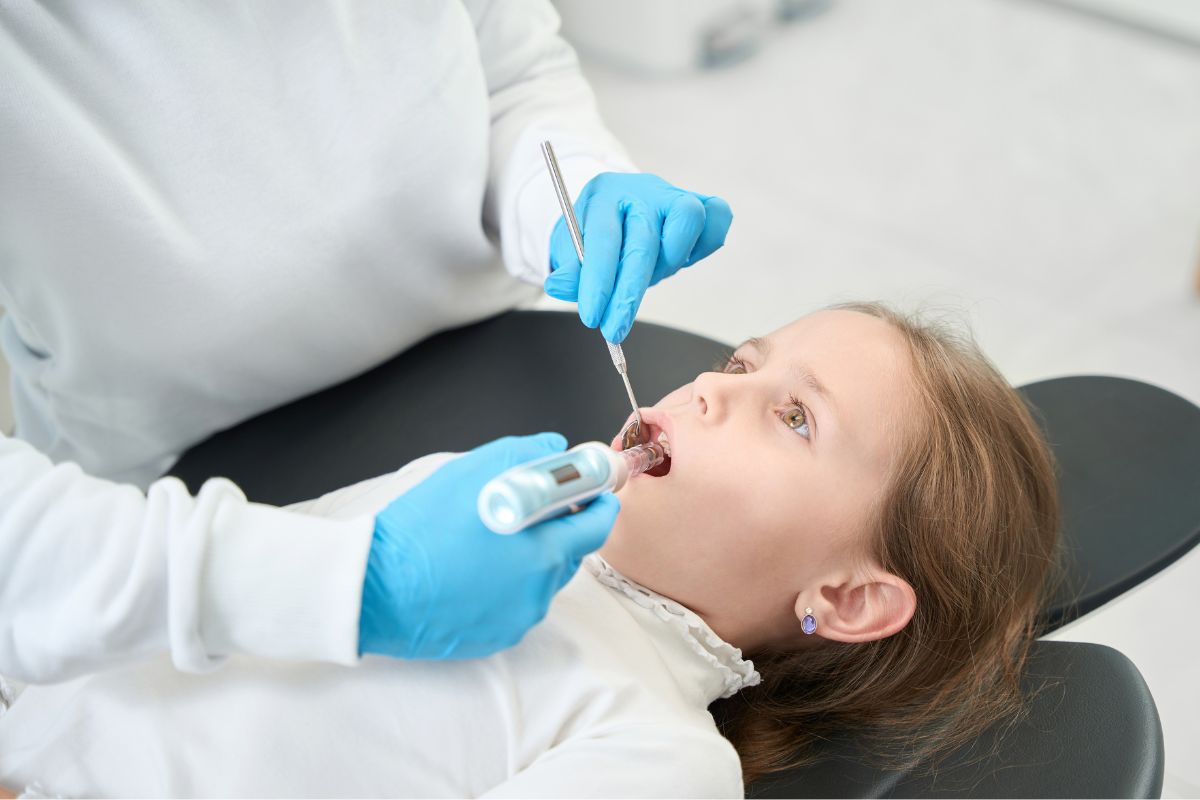
Does your child get nervous about visiting the dentist? You’re not alone—many kids feel anxious when it’s time for a dental appointment. Fortunately, sedation dentistry can make those visits easier, calmer, and even positive. By helping children relax during treatment, sedation allows dentists to complete procedures safely and efficiently while keeping your little one comfortable.
But when it comes to sedation options, parents often wonder, what’s the difference between oral and IV sedation—and which one is best for my child? Let’s take a closer look at both so you can make a confident, informed decision about your child’s dental care.
What Is Sedation Dentistry for Kids?
Sedation dentistry uses safe, controlled medication to help children relax during dental treatment. Depending on your child’s comfort level and the procedure’s complexity, your pediatric dentist may recommend oral or IV sedation. Both methods create a calm experience while ensuring your child’s safety and cooperation.
What Is Oral Sedation?
Oral sedation involves giving your child medication in a liquid or pill form before the dental procedure. This medicine helps your child feel drowsy, calm, and relaxed but still awake and able to respond. Oral sedation is an excellent choice for children with mild to moderate anxiety or for shorter dental treatments.
Benefits of oral sedation:
- No needles or injections
- Simple and easy to administer
- Helps reduce fear and anxiety
Limitations:
- Takes longer to take effect (about 20–30 minutes)
- The level of sedation can’t be adjusted once given
Your pediatric dentist will carefully determine the correct dosage based on your child’s weight and medical history, ensuring a safe and positive experience.
What Is IV Sedation?
IV sedation is delivered directly into your child’s bloodstream through a small vein, typically in the arm or hand. It works quickly and allows the dental team to adjust the sedation level throughout the procedure. Children under IV sedation are deeply relaxed and may not remember much of the appointment, but they’re monitored continuously by trained professionals.
Benefits of IV sedation:
- Works almost immediately
- Allows precise control of sedation depth
- Ideal for longer or more complex dental treatments
Limitations:
- Requires an IV line (needle insertion)
- Must be performed by a certified professional
IV sedation is often recommended for children with high anxiety, strong gag reflexes, or special healthcare needs.
Key Differences Between Oral and IV Sedation
| Feature | Oral Sedation | IV Sedation |
| How it’s given | By mouth (liquid or pill) | Through a vein |
| Onset time | 20–30 minutes | Almost immediate |
| Control | Limited once given | Adjustable in real time |
| Level of sedation | Mild to moderate | Moderate to deep |
| Monitoring | Basic | Continuous professional monitoring |
| Best for | Mild anxiety, short treatments | Severe anxiety, long procedures |
Which Option Is Best for Your Child?
The proper sedation method depends on your child’s comfort level, age, and the type of dental procedure. Your pediatric dentist will assess these factors and discuss the safest, most effective option. Both oral and IV sedation are safe when performed under professional supervision, ensuring that your child feels calm and cared for throughout the visit.
Safety and Aftercare Tips
After sedation, your child may feel sleepy or groggy—this is entirely normal. Plan a restful day at home, encourage water and soft foods, and follow your dentist’s aftercare instructions. Your child will recover quickly and return to their usual self with proper monitoring and care.
Give Your Child a Stress-Free Dental Experience
Both oral and IV sedation provide safe and effective ways to help children relax during dental treatment. While oral sedation is simple and noninvasive, IV sedation offers more profound relaxation and more control for complex procedures.
At Matthews & Dai Pediatric Dentistry & Orthodontics in Spring, Texas, we specialize in making dental care a positive experience for every child. Our team uses the safest sedation techniques to ensure your little one feels calm, comfortable, and cared for. Schedule a visit today to learn which sedation option is best for your child.