It usually starts with a routine moment. You’re watching your child smile for a school photo, or you notice something looks a little crowded when they laugh. Maybe their teacher mentioned it, or your family dentist brought it up at a cleaning and suggested you look into an early evaluation. Whatever brought you here, you’re asking the right question at the right time.
Most parents assume orthodontic care is something you think about once the adult teeth are all in. The reality is that some of the most effective orthodontic guidance happens well before that point — often while your child still has a mix of baby and permanent teeth. Families throughout Spring and the surrounding communities have been surprised to learn that an early conversation about pediatric orthodontic care can make a meaningful difference in how their child’s smile develops over time.
Here are five signs worth paying attention to, even if your child still has most of their baby teeth.
What Is a Pediatric Orthodontist and Why Does Timing Matter
A pediatric orthodontist has additional specialized training beyond a general dentist and, in many cases, beyond a general orthodontist as well. The focus is specifically on the developing bite and jaw structure of children — accounting for growth patterns, eruption timelines, and the unique way a child’s facial bones respond to guidance during key developmental windows.
The American Association of Orthodontists recommends that children have their first orthodontic evaluation by age 7. That may feel early, but at that age most children have a mix of baby teeth and early permanent teeth — enough for a trained eye to identify patterns that could become more complex if left unaddressed. This is sometimes called Phase 1 or interceptive orthodontics, and it’s not about rushing treatment. It’s about knowing when to act and when to simply monitor.
Sign 1 — Crowding Even Before Baby Teeth Fall Out
If you can see that your child’s permanent teeth are coming in behind their baby teeth, or stacking in front of them without enough room, that’s a meaningful signal. Some crowding is common, but when it’s visible early, it often points to an underlying space management issue that won’t resolve on its own.
Addressing this during mixed dentition — when both baby and adult teeth are present — gives an orthodontist more options and a more cooperative jaw structure to work with. Waiting until all adult teeth have arrived sometimes means the window for simpler, less invasive approaches has passed.
Sign 2 — Crossbite, Underbite, or Overbite That Is Already Visible
You don’t need to know the clinical terms to notice that something looks off when your child bites down. If their lower jaw seems to jut forward, if their upper teeth sit behind their lower front teeth, or if their bite looks significantly uneven from side to side, these are patterns that tend to become more difficult to correct as the jaw finishes developing.
A child’s jaw bones are still responsive at this age. Guided correctly, growth can work in your favor. That same flexibility diminishes as children move through adolescence and into adulthood, which is why earlier evaluation gives families more options — not fewer.
Sign 3 — Mouth Breathing, Snoring, or Difficulty Chewing
This one surprises many parents. Orthodontics isn’t only about how teeth look. If your child consistently breathes through their mouth, snores, or seems to have trouble chewing certain foods, these can be functional signs that connect to jaw development and airway positioning. Narrow palates, for example, are sometimes linked to both crowding and breathing patterns.
A pediatric orthodontist looks at function and structure together, not just cosmetic alignment. If these signs are present alongside other dental changes, they’re worth discussing.
Sign 4 — Prolonged Thumb Sucking or Pacifier Use Past Age 4
Oral habits are completely normal in infancy and early toddlerhood. But when thumb sucking or pacifier use continues past age 4, there’s a real possibility of impact on how the palate develops and how teeth erupt. The pressure and positioning involved in these habits over time can alter the arch shape in ways that redirect how permanent teeth come in.
This doesn’t automatically mean your child needs immediate treatment. A pediatric orthodontist can evaluate whether any changes are occurring, how significant they are, and whether watchful waiting or early guidance makes more sense for your child’s specific situation.
Sign 5 — Teeth Coming In Very Early, Very Late, or Out of Order
There’s a general sequence in which baby teeth fall out and permanent teeth emerge. When that sequence is significantly off — a tooth arriving very early, a baby tooth that doesn’t seem to want to fall out, or a permanent tooth that simply isn’t showing up — it can signal crowding beneath the surface, a blocked eruption path, or other structural factors.
Dental X-rays taken at an early orthodontic evaluation can show what’s happening below the gum line and help clarify whether the pattern is within normal variation or something that warrants monitoring or intervention.
How a Pediatric Orthodontist Evaluates a Child’s Smile
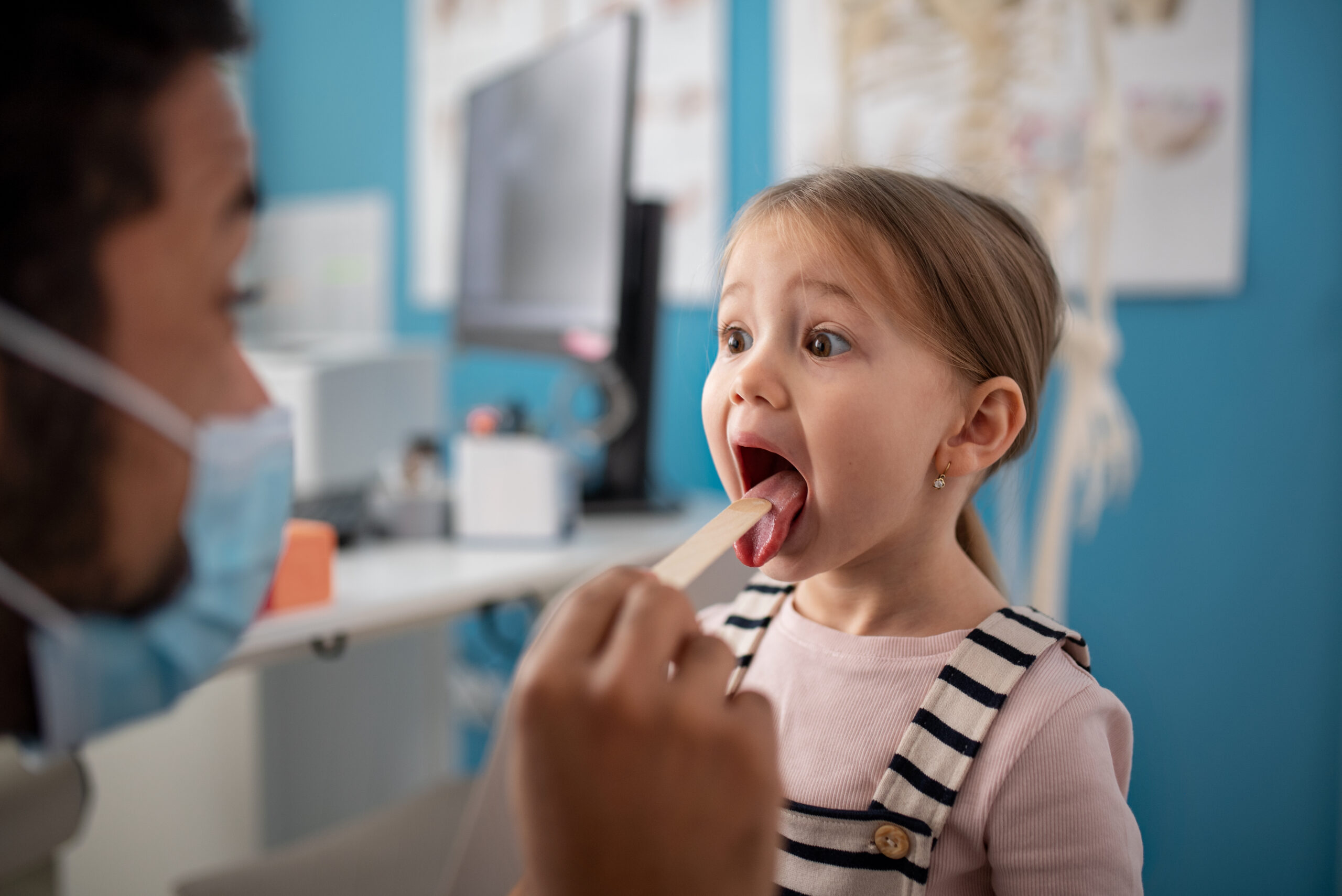
An initial orthodontic evaluation for a young child is typically low-key and observational. The process usually begins with a conversation — what the parents have noticed, how the child’s dental development has gone so far, and any functional concerns like chewing or speech.
From there, a visual examination looks at tooth positioning, bite relationship, jaw symmetry, and any signs of early crowding or misalignment. X-rays may be taken depending on the child’s age and what the visual exam suggests. The goal is to understand the full picture — current development, anticipated growth, and the relationship between function and aesthetics — before making any recommendations at all. Many children who come in for an early evaluation simply need periodic monitoring. Others benefit from targeted early guidance. The evaluation itself informs that decision.
Thinking About Next Steps
If any of the signs above feel familiar, or if you’ve simply been told by your child’s dentist that an orthodontic opinion might be worthwhile, a conversation is always a reasonable starting point. There’s no pressure in an early evaluation — it’s an opportunity to understand where your child is developmentally and what, if anything, makes sense to address now versus later.
Matthews & Dai Pediatric Dentistry & Orthodontics is located at 20423 Kuykendahl Rd, Suite 600in Spring, TX, and serves families from the greater Spring, Klein, and surrounding communities. If you’d like to explore an evaluation for your child, you’re welcome to schedule a visit at your own pace.
Frequently Asked Questions
At what age should a child first see an orthodontist?
The American Association of Orthodontists recommends an initial evaluation around age 7. At this point, enough permanent teeth have typically come in to give a clear picture of how the bite and jaw are developing, even though many baby teeth are still present.
Does early orthodontic treatment mean my child will need braces twice?
Not necessarily. Some children who receive early guidance do go on to have a second phase of treatment later, but the first phase often simplifies or shortens what would otherwise be needed. Others complete everything they need during the early window. The goal is always to do what’s appropriate for the individual child, not to add unnecessary steps.
Are orthodontic evaluations uncomfortable for young children?
A first evaluation is generally quite gentle. It typically involves a visual exam and a conversation, and may include X-rays if needed. Most young children do very well, especially in an office that’s designed with their comfort in mind.
Can baby teeth really affect how adult teeth come in?
Yes, in meaningful ways. Baby teeth hold space for the permanent teeth developing beneath them. If a baby tooth is lost too early, too late, or is positioned unusually, it can affect the path and spacing of the adult teeth that follow.
How do I know if what I’m noticing is normal or worth addressing?
That’s genuinely one of the best reasons to schedule an evaluation — not because something is definitely wrong, but because a trained professional can tell the difference between normal developmental variation and a pattern that benefits from early attention. If you’re uncertain, an evaluation gives you clarity either way.